14 November 2011

Graywashing

Good word. 

Graywashing was minted by Colin Milner, CEO of the International Council on Active Aging (ICAA).  From a recent article in The Journal on Active Aging®:

Tackling Graywashing (PDF)
by Marilynn Larkin
“Graywashing refers to the act of misleading consumers regarding any purported age-associated benefits of a product or service,” Milner explains … “Graywashing gives older-adult consumers a false sense of security by positioning a product or service as uniquely beneficial to them…”

…. On the opposite end of the stereotyping
spectrum are campaigns that suggest
all older adults should be superstars.
“Portrayed in the media and marketing
materials as healthy, wealthy and defying
aging, ‘superstar’ older adults present
an image that also distorts reality,”
comments Milner. “Such stereotypes
imply or explicitly state that ‘aging well’
requires health, independence, vitality,
economic wherewithal and social
connections. Not surprisingly, these are
qualities we equate with youthfulness,”
he states.

Way back in 2005 I wrote about similar issues:

Don’t Paint Too Rosy A Picture (Excerpts)
imageA recent article in USA Today asks us to “take a moment to journey forward to 2046, when 79 million baby boomers will be 82 to 100 years old.”  A paragraph later, the reporter asks, “So just what kind of America will be forged by this crowd of geriatric goliaths?”

Excuse me for being an unassuming ‘David’ (or even worse, a genocidal Grim Reaper) but I doubt very much that all 79 million Baby Boomers in the U.S. will still be alive in forty years, swaggering like giants – unless the medical establishment is holding out on me.

The good news you know: many Baby Boomers will live longer, healthier lives – more so than in any previous generations. The bad news you also know: by 2046 a huge chunk Boomers will have passed on, and another huge chunk will be dealing with acute diseases and afflictions. 

The problem is that well-meaning articles in the press like the USA Today piece, along with mountains of 50+ marketing fodder, are setting up Boomers for a psychological fall.  There will be a backlash.

And I’ve blogged about them through the years:

Boomer Backlash II
If every time someone over fifty sees a commercial targeting them and it’s always for an age-related product or service, pretty soon their eyes will glaze over, they’ll get itchy and grumpy.

The Era of Oversell is Over
There’s nothing wrong with being positive and aspirational – you just have to temper it with dollops of reality so your marketing won’t be dismissed as pie-in-the-sky nonsense.

Uh-oh. We’re in trouble
Rapped on the knuckles…

imageMarilynn Larkin interviewed me for the article.  I put up a tongue-in-cheek post about it:

The Best Anti-Aging Products, Services, and Activities: Guaranteed!
There are plenty of anti-aging products, services, and activities that are staggeringly effective.  They stop the aging process almost immediately…

So quotes from yours truly are splattered throughout Tackling Graywashing – along with trenchant comments from Lori Bitter and Dr. Bill Thomas.

Thanks, Mr. Milner, for coming up with a masterful phrase to describe it all.

10 November 2011

The New Millennium Tales: Baby Boomer Marketing Stories

MillenniumTalesCover
It’s larger than this, hardcover and classy – suitable for dazzling display on a petite coffee table. 

Yours Truly scribbled a tale, one of many penned by marketing, advertising, business, political, and artsy folk from around the globe.  Also expect poems, illustrations, cartoons, great commercial photos and print campaigns, etc.
The Pilgrim behind it all:
imageKevin Lavery He is one of the founders of Millennium, the UK's leading specialist advertising and marketing agency for the 50+ market. Kevin is an advertising and direct marketing specialist with over 37 years' agency experience, having started with Ogilvy & Mather in 1974.
The Pilgrim behind the Pilgrim behind it all:
imageReg Starkey
Reg's practical experience of working with many of the world's most acknowledged advertising agencies has now been combined with an in-depth knowledge of the important and neglected mature market. His knowledge and consultancy in this sector is sought by discerning clients in a broad range of sectors.
From The Introductory Tale:
imageThis book is just a step along the way. It’s not a ‘how-to’ book, it’s more an ideas book. Can we offer Baby Boomer marketing enlightenment?That’s for you dear reader to decide. What I can promise is the these diverse tales will give you a worldwide view of baby boomer thinking, needs and wants, and hopefully stimulate you to look at your Baby Boomer marketing with fresh eyes. In much the same way as the Canterbury Tales gives a snapshot of life in late 14th century England, I hope this book will give you an insight into the world of the Baby Boomer at the start of the second decade of the new Millennium.
A handful of blurbs from the back cover:
image

Praise for The New Millennium Tales

This book is ahead of its time in its recognition and understanding of the importance of the mature market. Whilst others waste time obsessing about youth, this collection sheds all the light you need on reaching Baby Boomers.” – Fiona Webster, former Editor of Active Life magazine, writer, broadcaster and mature market specialist.
“Chaucer would applaud this stereotype-busting snapshot of the Boomer generation. Marketers would do well to pay heed to Kevin Lavery’s impressive band of marketing pilgrims who know
the best route to the Boomer’s heart and pocketbook.” – Carol Orsborn, Ph.D. CEO, BoomerInfluence.com, Co-Author of: Vibrant Nation: What Women 50+ Know, Think, Do and Buy (with Stephen Reily)
“It is quite remarkable that the marketing community has managed to ignore the maturing baby boomer market; the largest, wealthiest and best educated segment of our society… Lavery’s book hopefully will go a long way towards opening some eyes.” – Jerry Shereshewsky, GrownUpMarketing, New York
The New Millennium Tales is now available on Amazon (UK). Copies may make their way along worldwide trade routes, becoming obtainable elsewhere. 
imageAs sooth is said, eld has great advantage;
In eld is both wisdom and usage;
Men may the old outrun but not outred.
– Geoffrey Chaucer, Canterbury Tales

Age has its advantages, after all. It is a sign of wisdom and of long practice. You can outrun the old, but you cannot outwit them.
– Canterbury Tales, A Retelling by Peter Ackroyd (Penguin Hardback Classics)
Now for the COMPLETE LIST OF NEW MILLENNIUM TALES.  I’ve linked to a few PILGRIMS, but google some on your own.  It’s an eclectic, impressive bunch:
The Introductory Tale
Kevin Lavery...........................….. 7

The Designer’s Tale
Rama Gheerawo......................... 11
The Lifeboat Man’s Tale
David Brann................................ 15

The American Consultant’s Tale
Chuck Nyren....................……….. 20

The Messenger’s Tale
Tim Hamill................................. 25

The Raku-Raku Land Tale
Florian Kohlbacher............…..... 29

The Actor’s Tale
Mike Grady.........................…..… 34

The Historian’s Tale
Leon Kreitzman.......................... 37
The Retailer’s Tale
Sara Prowse................................ 41

The Celebrity‘s Tale
Lynda Bellingham....................... 45

The Journeyman’s Tale
Dick Stroud................................. 46

The Ambassador’s Tale
Sir Sherard Cowper-Coles.......... 50

The Australian Forecaster’s Tale
Charlie Nelson ………................... 53

The Journalist’s Tale
John Tylee................................... 58

The Trade Unionist’s Tale
Lord Brooke of Alverthorpe........ 63

The Photographer’s Tale
Peter Rand................................... 67

The German Marketer’s Tale
Frank Leyhausen......................… 73

The Supermodel’s Tale
Paula Hamilton........................... 77

The Sexpert’s Tale
Carol Martin-Sperry.................. 79

The Gamekeeper’s Tale
David Wethey............................ 84

The Poet’s Tale
Roger McGough...........…........... 89

The Cruiser’s Tale
Nigel Lingard.................…......... 90

The Blue Cross Tale
Zair Berry................................... 94

The Soldier’s Tale
Major General David Burden... 95

The New American
Woman’s Tale
Leda Sanford............................. 100

The Disability
Consultant’s Tale
Mary-Anne Rankin................... 101

The Music Magazine’s Tale
Brian Oliver............................... 104

The Eco-gardener’s Tale
John Dominic............................ 105

The Australian
Ad Woman’s Tale
Gill Walker................................. 109

The Wife’s Tale
Sue Gluck...........................…...... 114

The Ex-Patriate’s Tale
Allein G. Moore..............….......... 115

The Producer’s Tale
Peter Shillingford..............…...... 120

The IFA’s Tale
Peter Maxwell-Lyte................... 121

The Californian Tale
Bill Kay....................................... 125

The Ad Man’s Tale
Dick Lumsden........................... 129

The Project Leader’s Tale
Matt Thornhill........................... 130

The Choirboy’s Tale
David Watson............................ 134

The Media Man’s Tale
David Cravit.............................. 135

The Media Woman’s Tale
Pat Lowe.................................... 140

The Researcher’s Tale
David Sinclair............................ 142

The Inventor’s Tale
Arlene Astell............................. 146

The Grandfather’s Tale
Charles Grimaldi....................... 147

The Straight Man’s Tale
Peter Tomlinson........................ 152

The Parisian Tale
Brent Green............................... 153

The Builder’s Tale
Keith Chapman......................... 156

The Nurse’s Tale
Kathleen McGrath.................... 157

The Doctor’s Tale
Dr Michael Chamberlain.......... 161

The Brand Doctor’s Tale
Chris Payne............................... 162

The Policeman’s Tale
Michael Hinchliffe.................... 163

The Personal Trainer’s Tale
Angie Best................................. 167

The Planner’s Tale
Nicholine Hayward.................. 169

The Radio Operator’s Tale
Tony Hertz................................. 174

The Media Independent’s Tale
John Ayling............................... 175

The Father’s Tale
Andrew Kitching...................... 177

The Mathematician’s Tale
Mark Ronan............................. 178

The Anchor’s Tale
Richard Quest......................... 182

The Teetotaller’s Tale
Anthony McLellan........l.......... 183

The Brewer’s Tale
Keith Quinn............................. 187

The Paparazzo’s Tale
Eddie Boldizsar........................ 191

The Lawyer’s Tale
Yvette Vanson & Michael
Mansfield QC..................... ...... 193

The Cartoonist’s Tale
Gray Jolliffe.............................. 197

The Author’s Tale
Richard Donkin........................ 200

The Yankee’s Tale
Hunter Riley.............................. 201

The Media Correspondent’s Tale
Torin Douglas............................ 205

The Butterfly’s Tale
Rachel Meade...............….......... 206

The Buddhist’s Tale
Michael Armitage..........…......... 210

The Teacher’s Tale
Robert Johnson.................…...... 211

The Artist’s Tale
John Fisher....................….......... 216

The Slimmer’s Tale
Ann Wimbledon.................…..... 219

The Dancer’s Tale
Eva Lewis...........................…..... 220

The Social Worker’s Tale
Anne Mummery............…......... 228

The Animator’s Tale
Tony Cuthbert............…............. 229

The Accountant’s Tale
Gordon Cowie..................…....... 231
.
The Dermatologist Tale
Dr Nick Lowe MD..................... 232

The Hippy’s Tale
Steve Ballard......................…..... 236

The Graphologist’s Tale
Erik Rees.......................….......... 237

The Typographers Tale
Adrian Greenaway........…......... 239

The Islander’s Tale
Jeremy Thomas...............…....... 240

The Visionary’s Tale
Joan Bird...........................…...... 243

The Weaver’s Tale
Jon Stannah and
Emily Luscombe............…......... 244

The Co-pilot’s Tale
John Peake........................…...... 246

The Dreamer’s Tale
Sally Wilton...................….......... 249

The Scientist’s Tale
Professor James Scott......…...... 250

The Winner’s Tale
Michael Seymour.........…........... 252

The Collector’s Tale
Chris Ingram..................…......... 253

The Compassionate Tale
Andrew Tyler................….......... 256

The Agency President’s Tale
Lori Bitter.................................. 257

The Fundraiser’s Tale
Margaret E. O’Grady................ 261

The Cheesemonger’s Tale
Justin Tunstall........................... 262

The Eagle’s Tale
Michael Belben.............….......... 265

The Corporate Cook’s Tale
Mark Lyons................................ 266

The Pumpkin’s Tale
Paul Mercieca....................…..... 267

The Godfather’s Tale
Reg Starkey......................…....... 271

The Literary Agent’s Tale
Dinah Wiener............................ 272

The Trainers’ Tale
Speakers’ Corner...............…..... 273

02 November 2011

The Press Release Parade Marches On

I’m in a bad mood today (for personal reasons) so I’m putting up a nasty post.  It’ll make me feel better. 

It’s a follow-up to this one:

The Press Release Parade
… Press Releases are like virtual confetti nowadays … Most are daft, pointless blather…

While I usually sweep up the confetti and toss it, for some reason I bent down and read this one (names not revealed to protect the guilty):

Chuck, Good Morning.

****** Adding a New twist to Mobile Advertising

“Coming Soon” will now allow Apps to promote before launch

Mobile marketing platform ******* is launching a new ad unit for iPhone that lets app developers promote the applications they’re about to launch. The “Coming Soon” ad doesn’t just announce the forthcoming applications, however, but can also gather early sign-ups from potential users through its “notify me” button.

So far, so good.  Not that I think apps will be taking over the world like most people, but I think they’re fine.

The press release continues:

Here are some statistics about mobile advertisements:

  • Mobile advertising generates 2.5 times more attention than a static billboard.
  • 97% is the recall rate on mobile advertising.
  • 96% of respondents say mobile advertising is more effective than traditional outdoor advertising.- Outdoor Advertising Magazine TACA

…. What?  Something sounded very weird, especially the percentages.  I knew these had to be wrong. 

So I did a bit of research.  The “statistics about mobile advertisements” are about those moving and/or animated ads on commercial vehicles.  Moving billboards are more effective than simple paper billboards. 

This has absolutely nothing to do with smartphone apps.

imagePower of Mobile Advertising

  • 97% is the recall rate on mobile advertising.
    - Outdoor Advertising Magazine
  • 96% of respondents say mobile advertising is more effective than traditional outdoor advertising.
  • Mobile advertising generates 2.5 times more attention than a static billboard.
ADHITCH

The press release is from a semi-major PR outfit.  Do they check their facts before sending out press releases?  Do they make sure a press release is reviewed by a few other employees before going public? 

imageHere’s a quiz.  Take it, and grade it yourself:

The person who wrote this press release…
a)  is an idiot.
b)  is sloppy and incompetent.
c)  is trying to put something over on all of us.
imaged)  has some form of myopia or mental condition, and can’t tell the difference between a ‘mobile billboard’ and a ‘smartphone app’.
e) possibly isn’t confused, and is really promoting outdoor mobile advertising, not a smartphone app.  I’m the one who’s confused.
f)  Come up with your own reasons for this silly, useless, deceptive press release.

… Whew.  I feel so much better now.

20 October 2011

Baby Boomers & Smartphones

It was way back in 2007 when I blogged a bit about smartphones vs. simple cell phones, listing “The Good” and “The Bad”:

The real issue:
Marketers assuming that if you're over fifty you're automatically a member of one and only one age demographic - all with the same needs and wants.

It’s not a question of dumbing down technology for Baby Boomers (we invented and were the first users of most of this stuff) – but more a question of universal design, easy-to-handle knobs and controls, bigger fonts and correct color contrasts…

A few experts on this subject:

Smartphones & Usability
Jakob Nielsen:
How do you design mobile applications for older people? With great care.


imageTech & Baby Boomers: Universal Design vs. Universally Dull
Dr. Joseph Coughlin
The convergence of technology and global ageing is driving new business opportunities, innovations in service delivery and the promise of a better life tomorrow for older adults …

Fat fingers are no barrier to using the iPhone
By Dick Stroud
The first video is from the Ellen DeGeneres show. It is an amusing parody of the Apple's iPhone 4 ad. I have to say I think it contains a smidgen of truth.

So four years later it’s nice to find another expert with a practical list of smartphone features he uses regularly:

imageSmartphone Features for Baby Boomers
by Robert Fowler
… I found my smartphone easy to use and now understand it’s features and how it will help me in my daily life. I think Boomers will continue to discover the benefits of smartphones  and find them useful like I did.  As we get older using technology will make life easier and more manageable.

For all smartphone designers to remember: an easy-to-grip handle on a utensil is not ‘dumbing down’.

15 October 2011

Understanding the Boomers and Beyond Market

imageCD Publications has a long history of excellent 50+ Marketing books, pamphlets and newsletters.  77 Truths About Marketing To The 50+ Consumer by Kurt Medina and John Migliaccio was published over a decade ago, and updated in 2009Selling To Seniors has been around for I don’t know how long, and yours truly has been featured in it I don’t know how many times.

Their latest offering: 

imageUnderstanding the Boomers and Beyond Market 
Publisher: Mike Gerecht Senior Editor:
Dr. Leslie M. Harris
This new Special Report, published by Selling to Seniors – the 50+ Marketing Report,  zeros in on the aging Baby Boomer market and how it differs significantly from both older and younger generations … The book includes essays from some of the world's leading experts on the 50+ market, including:  Adriane Berg, Brent Bouchez, Mark Gaylor, Gary Geyer, Steve Howard, Paul Johnson, Gerry Linda, Theodore Reed, Jerry Shereshewsky, Jane Singer and Dick Stroud, as well as Dr. Harris.

imageIn the first chapter by Gerry Linda, there is discussion about The Nyren Hypothesis – something I never knew existed. (Then again, hypotheses may not exist, since they are by definition hypothetical.)  If I told you what it was, I’d have to defend it with footnotes and citations and all sorts of academic rigamarole.  You’ll just have to read the book. 

And do.  Understanding the Boomers and Beyond Market is full of outstanding, easily digestible, practical marketing advice.

14 October 2011

Entrepreneurs & Baby Boomers III

imageimageWhen weather permits, I peddle up and down a popular bike trail here in The Great Northwest – on my big-seat, balloon-wheel cruiser.  Usually I pass by folks pushing, pulling, or tugging all sorts of wild contraptions.  Often they’re strapped to these medieval torture devices.

imageimageThose measly trike things unnerve me the most.  Put someone on one, and they remind me of cartoon velociraptors swerving and scurrying, looking for lunch.

Awhile back I received a phone call from a gentleman who’d designed a clever piece of exercise/sporting equipment for rollicking and rolling on trails. It was an adaptation of another clever, successful product, making a certain popular activity much safer – and more fun.  He told me the URL, I punched it up, and immediately knew his offering had potential.  Lots of potential.

I was preparing for an overseas gig, said I liked his product, and would contact him when I returned.

A week later I punched up the URL and took a look around.  I still loved the product, but there were major issues – both with the design and the positioning:

  • imageAlthough well-constructed, the product looked like an odd piece of medical equipment you’d find abandoned in a corner of a hospital.  It needed an industrial designer/artist to mold it into something exciting and engaging.  Colors, sleek lines, etc.  
  • And, of course, since it’s (mostly) for Baby Boomers, the offering was positioned as a medical device. Very silly.  It’s actually quite an exhilarating and fun piece of sporting equipment - although you’d never know that by looking at it.

I emailed the inventor/entrepreneur, telling him that in the next few days was going to put together a memo about his product, tell him what I think he needed to do and what I could do for him. 

He immediately replied:

I didn't request anything from you … I didn't hire you … I just finished professional videos which are now being edited.

Not sure how to respond (if at all), I thought about the fact that most entrepreneurs – at least ones with an idea for a product or service – might not be businesspeople, might be a bit naïve and paranoid.  As understanding as I could be, I explained my intentions:

Of course you didn’t hire me. I was going to ‘pitch’ you at no cost.

How about this – do what you’re doing and have fun and good luck.  But if it isn’t going as planned in a few months, contact me. I’ll put together the pitch then.

I never expected to hear from him again – and never did.  A month later I punched up his web site.  The ‘professional video’ was anything but.  Some lady quacked away about the product – and there was no wind shield for the microphone.  Just standing there, it sounded like she was reporting from the scene of a hurricane. 

And the rather dismal-looking picture of the product languishes on the web site.  Alexa global ranking: 16,104,259.  No U.S. ranking because when one or two or less people visit a site per month, Alexa ignores it.

Lessons for entrepreneurs?  Due Diligence, of course.  But not everybody is out to steal your your money with promises of fortunes with their marketing/advertising prowess.  I’m not the only one who could’ve helped this fellow, put him on the right track.


Entrepreneurs & Baby Boomers I

Entrepreneurs & Baby Boomers II

06 October 2011

Entrepreneurs & Baby Boomers: Part II

From my business web site:

I have an egalitarian bent and enjoy slinging sentences for small start-ups and entrepreneurs.

So I get a lot of email from entrepreneurs and folks starting their own businesses.  Some emails are ignored (MLM, vitamins, supplements, etc.), some are answered and we might chat for a bit on the phone as I try to point them in the right direction, some become clients, some don’t.

It’s sort of like the real-life business world.

I’ve found that there are two mistakes made by almost every entrepreneur targeting this unwieldy, diverse market:

  1. Positioning their product/service in a medical category when it could easily be positioned as a lifestyle or premium offering.
  2. Assuming that all you need is a web site, maybe a bit of paid Google Search, maybe some banner ads here and there – and they will come.

I’ll write about #1 in future posts.  Let me take on #2 first (not that I haven’t been screaming about it for years).

Some posts you should skim before I prattle on:

Click this ad. 0.051% do.
… a tiny fraction of people ever click on an ad. In fact, 99% of stable cookies examined never click on an ad … optimization of campaigns to achieve higher CTR may in fact be reducing brand ROI.

Ad Campaign Effectiveness Dives
by Steve McClellan
image…C
ertain segments in the online space were more sharply impacted during the reported period. Display ads and sponsorships were down 26% and 35%, respectively, in customer engagement.

Online ads generally were 25% less effective than traditional ads for "incremental customer demand generation," per the report.

Foretellings
…With the exception of the workplace, smartphones (along with iPads and Kindles or something like them) might just make desktops and laptops and the web as we know it obsolete.  If ‘being connected’ mostly means communicating with friends, doing simple search, reading the news - then all that’s really needed is a smartphone. 

A ubiquitous phrase (I’ve used it myself):  You have to cut through the clutter. 

imageActually, the reverse is true when uploading a product/service web site.  A better hackneyed analogy: Think about traveling along a major highway in the desert and seeing a dirt road leading to what appears to be nowhere.  Now imagine travelling ten miles up this empty road and finding a big billboard for your product/service.  That’s what a consumer-targeted web site really is. 

You can put a small billboard on the main highway telling people to turn off and travel ten miles to see your big billboard – but how many people will do that

imageAlexa is a free service (or partially free).  I have their toolbar on my browser.  It’s fascinating to know what a web page rank is:

A Bit Of Social Networking Site Research

  • ****.com has a three-month global Alexa traffic rank of 32,289. Approximately 68% of visits are bounces (one page view only).
  • *******.com has a three-month global Alexa traffic rank of 411,987, and roughly 58% of visits to the site consist of only one page view (i.e., are bounces).

Ready to spend your marketing nickels or your gazillions on Banner Ads or coercing members to be ‘fans’ on these sites?

I had a meeting with an advertising agency a few months ago.  Their client is a medium-sized financial planning company.  They hired a comic actor (semi-well known) and made a few videos with him, hoping they’d ‘go viral’ or something.  This was not a TV campaign, and I wondered why.  “We’re going to have a Facebook page!” the account exec said, with a big, excited smile.  They already had some banner ads floating around on a few financial web sites. 

Here is the Alexa ranking for this web-only campaign: image
There isn’t a U.S. Ranking because it’s so infinitesimal you can’t measure it. 

And this is not a small start-up. 

Part III will be about an interesting piece of sporting equipment that is being positioned as a medical device.  Its Alexa global ranking at the moment is 16,114,472.


Entrepreneurs & Baby Boomers: Part I

26 September 2011

Entrepreneurs & Baby Boomers: Part I

All of a sudden every other news article about Baby Boomers is focused on business and entrepreneurs.  A handful:

Advice for baby boomers who want to start businesses
By RON CONSOLINO, HOUSTON CHRONICLE
imageQ: I'm an early baby boomer and am thinking about leaving my corporate job to open a small business of my own. Do you have any advice?
A: You are not alone. Many of America's 77 million baby boomers contemplating retirement are finding that slowing down is the last thing they want to do.

Rise of the Boompreneur
By Casey Dowd
imageBoomer: Why are baby boomers starting businesses?
Izard: The economic conditions today certainly have triggered many baby boomers to want to go back to work and often they want to work in their own business; they don't want to work for someone else.

Small Business Survey Reveals Baby Boomers Account for 84 Percent of New Businesses
“To be able to use my 401(k) to invest in myself and to start my own business made everything possible. This was the best business decision I have made in my career.”

An Aging Population Means New Jobs
imageKerry Hannon, Contributor
This demographic shift is already creating a wave of new fields and opportunities for workers of all ages. It’s just a tease of what’s to come.

South Florida is stage for new generation of entrepreneurs: Baby boomers
Peter Fogel and Anna Collins, who are baby boomers, (born between 1946-1964), have found their niche: an Internet radio show in which they talk about themselves and everyone else their age, laugh a lot and make money doing it.

AARP Launches New Innovation@50+ Scholarships for DEMO Conference
New scholarships to help two entrepreneurs pitch the next great idea for Americans 50+ at nation’s premiere start-up launch conference.

An excellent introductory video about this emerging business market (although it concentrates on technology only – just about every industry can benefit from targeting Baby Boomers):

MIT AgeLab: Emerging Business Markets in Aging with Dr. Joseph Coughlin

About three minutes in, Maureen Mohyde says something that sounds very familiar.  From my book © 2005, 2007:

"Advertising to Baby Boomers" Targets Clients and Entrepreneurs
imageIn his book "Advertising to Baby Boomers," Chuck Nyren takes on the excuses that many advertising agencies give for not targeting the baby boom audience, and urges companies wanting to attract this formidable market of 76 million people to rethink their approaches.

For the next few posts (over the next week or so), I’ll concentrate on some common mistakes entrepreneurs have made when advertising and marketing to Baby Boomers.  Most will be real-life examples.

18 September 2011

Ameriprise: Psychedelic Peace Signs Now White Picket Fences

What a long, strange trip it’s been…” watching Ameriprise pander to Baby Boomers.  Originally (well, make that 2005 when it split off from American Express for reasons I’ll leave to legal experts to comment on), the company burst on the scene with all sorts of silliness:

Invoking "The Sixties" (2005)
Ameriprise's campaign slinks around and takes the low road — invoking 'The Sixties' for no reason other than to unctuously 'brand' their service.

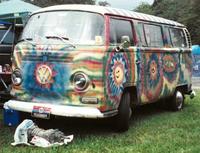
The two spots I've seen open up with a montage (make that a sloppy collage) of standard-issue 'Love-In' stock footage and clips of home movies. There may be some recently shot computer-played-with video mixed into the mess. At some point, a bunch of kids pop out of a VW Bus — and magically morph into fiftysomethings.

Ameriprise vs. Fidelity Financial Redux
The 1960s were about cultural change and political activism. But in Ameriprise's new commercials, the era's touchstones are evoked in the name of money, money, money.

Dennis Hopper for Ameriprise

Advertising Has Removed Music's Soul

A big chunk of the campaign’s subtext was “We’re this brand-new financial planning company just for you groovy Baby Boomers!”

A few years later, Ameriprise calmed down a bit:

Meet Us Today (The spot has vanished, but you’ll get the message.)

imageNow it seems Aunt Polly made Tom whitewash that fence.  No more peace signs or psychedelic graffiti. 

Ameriprise's new face of retirement
The new campaign features two spots. In the one titled "Generations," Tommy Lee Jones leans on a white picket fence as iconic images of farmers, a small-town diner and college students walking through a picturesque campus fill the screen.

imageAmeriprise Speaks With a New Voice

By STUART ELLIOTT
The initial commercials feature Mr. Jones outdoors, leaning on a fence, and speaking to the camera in his characteristic plain-talk tones.

Here’s my favorite part:

Mr. Jones … describes how Ameriprise has worked hard for its customers since 1894, “never taking a bailout.”

So all of a sudden Ameriprise is not a new, shake’em up, dazzling  company – but a stodgy, conservative one that’s 115 years old, “never taking a bailout.”

Hmmm.  Very admirable.  But … how many ‘bailouts’ have been offered to Ameriprise over the last 115 years?  One?

While using television or movie stars as spokespeople usually isn’t a good idea…

CELEBRITY ENDORSEMENTS THAT ARE MOST PERSUASIVE
image

…Tommy Lee Jones is a likable fellow – and brilliant actor.  Not a bad choice if you think your product/service needs a face:

Ameriprise

05 September 2011

The Obligatory Follow-Up iPad (and Smartphone and QR Codes) Post

I have a handful of zombie posts – ones that keep getting oodles of hits year after year.  Over the last three months, one from April 2010 has crawled out of the grave, haunting  the internet.  It’s more popular now than when first published.

Why? I guess NostraChuckus has been divining the future behind my back:

The Obligatory iPad Post (April 2010)
Used in relaxed mode…” (Dick Stroud) That reflects a lot of what I said way back in April ‘07 about the strength of magazines and why they’re not going away…

imageI use the word iPad as a generic term referring to all tablets, sort of like “Have you googled anything on Bing lately?”  Droid, Mac OS, Windows 7 – don’t ask me about that stuff.  I’m more interested in the concept and how it impacts advertising and marketing to Baby Boomers.

A handful of news stories:

As PCs Wane, Companies Look to Tablets
By VERNE G. KOPYTOFF and IAN AUSTEN
…Computer makers are expected to ship only about 4 percent more PCs this year than last year, according to IDC, a research firm. Tablets, in contrast, are flying off store shelves.

Sounds familiar.  At least to NostraChuckus:

Foretellings (2010)
…With the exception of the workplace, smartphones (along with iPads and Kindles or something like them) might just make desktops and laptops and the web as we know it obsolete.  If ‘being connected’ mostly means communicating with friends, doing simple search, reading the news - then all that’s really needed is a smartphone. 

Ad Campaign Effectiveness Dives
by Steve McClellan
image…C
ertain segments in the online space were more sharply impacted during the reported period. Display ads and sponsorships were down 26% and 35%, respectively, in customer engagement.

Online ads generally were 25% less effective than traditional ads for "incremental customer demand generation," per the report.

What a surprise:

Click this ad. 0.051% do.
… a tiny fraction of people ever click on an ad. In fact, 99% of stable cookies examined never click on an ad … optimization of campaigns to achieve higher CTR may in fact be reducing brand ROI.

And…

Smartphones & Usability
There is no way anybody, no matter what age, will put up with graphic gizmo advertising on smartphones.  Simple Fact: The real estate isn’t there.

New Study Reveals Generational Differences in Mobile Device Usage
Boomers are the most likely buyers of eReaders…  More than 9 out of 10 Boomers (92%) use the device at home, 13% at work, and 36% power up their eReaders while on the go.

Baby Boomers Up-to-Date on Smartphone Technology, Study Finds
image"It is a common misconception that smartphones are complicated or hard to operate," Marick said. "But as we see in this survey, an overwhelming majority of current smartphone owners ages 40-plus were able to teach themselves the functions of their device."

Wow.  What a shock.  From my book, first published in 2005:

Shock redux:

Snake Oil In Cyberspace (February 2009)
A recent report from Forrester Research indicates that while it might be tempting to categorize all aging Americans as techno-dinosaurs and Luddites, more than 60 percent of baby boomers are avid consumers of social media like blogs, forums, podcasts and online videos…

Perhaps … it is simply a case of older users being a bit more savvy about marketing ploys, social networking, and the intermixing of the two.

QR Codes are beginning to play a big part in it all:

Foretellings II
How revolutionary!  How clever we are in this modern day and age!  Imagine! Using your phone to order from a grocery store and having your items delivered!  What’ll they think of next?

But …

QR Code Scanners Skew Male, Young, Wealthy

However, the numbers aren’t shoddy for Baby Boomers.  And add this into the equation:

Home Most Popular QR Code Location
The most popular source of a scanned QR code was a printed magazine or newspaper, with nearly half (49.4%) scanning QR codes from this source…

Among mobile users who scanned a QR code on their mobile devices in June, 58% did so from their home…

And that brings me to my mantra, repeated so many times by yours truly that I’m even sick of hearing it.  Update it a bit with QR codes:

The Most Effective Marketing/Advertising Model For Reaching Baby Boomers: What is now called (silly retronym ahead) traditional advertising pushing you to an age-friendly, informative product/services web site.

What can be gleaned from this meandering, bloated post? 

  • Smartphones are used to scan QR codes while reading newspapers and magazines at home.
  • The perfect tablet (someday) for Baby Boomers will be big, thin, light, unbreakable – and while you’ll be able to use it for search, email, Facebooky things, etc. – it will mostly be for curling up on a couch and reading your favorite magazines, newspapers, books, watching short videos, etc.  I think we used to call this ‘alone time’.

Takeaways:

  • Television, Magazines, Radio, Outdoor: Advertising 
  • Smartphones: Some Marketing on steroids, no advertising
  • Tablets: Advertising, maybe some marketing – but you’d better be careful.  Remember – most  Baby Boomers will be in ‘relaxed mode’ when using tablets. 

If you don’t know what ‘relaxed mode’ is:

Positioning Magazines for Baby Boomers April 2007